
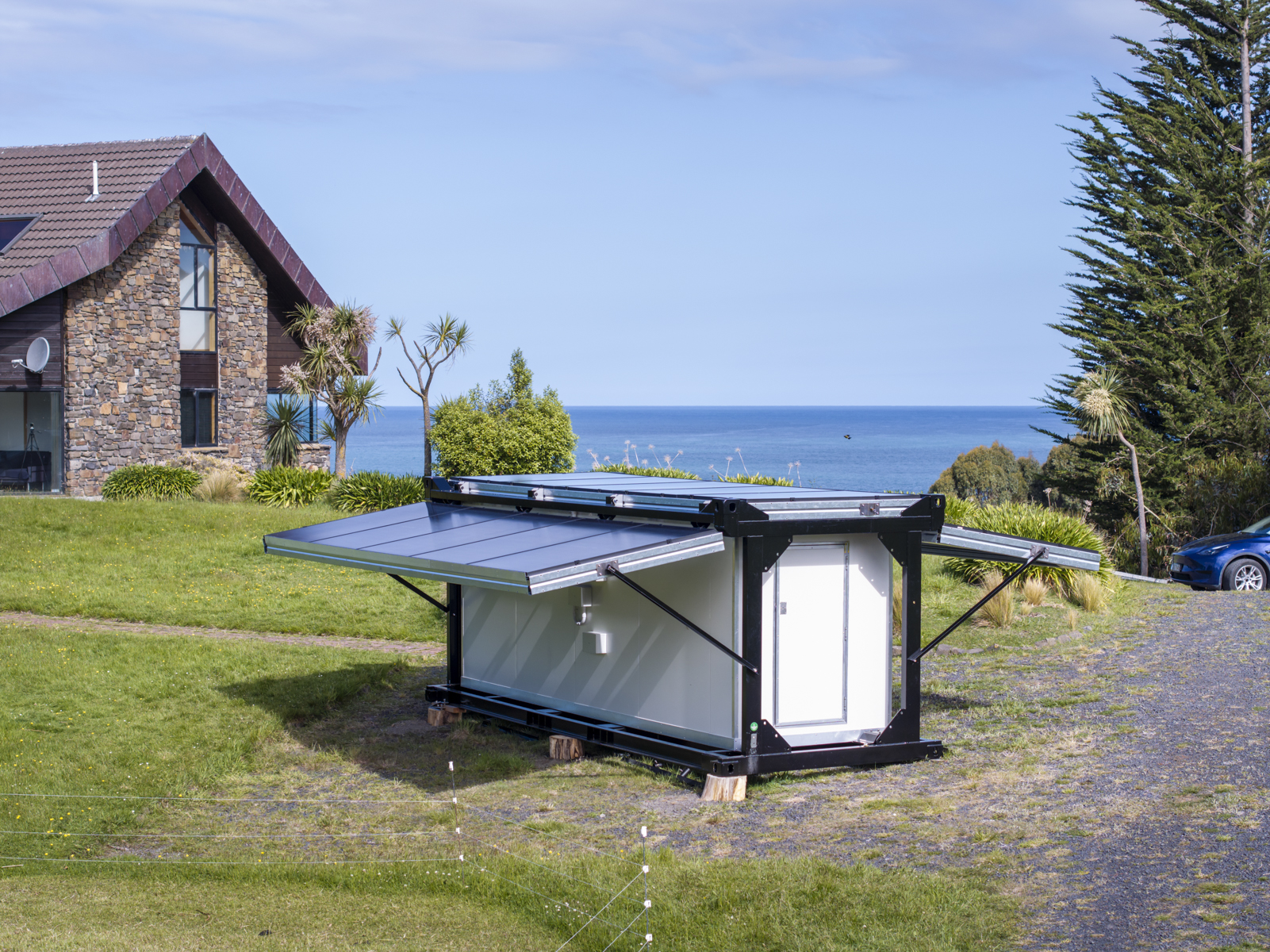
We are pleased to share Part I of the journey of our latest PowerCrate® build, the first of a new product line designed specifically for the equatorial Pacific.
In mid 2025, Powerhouse Wind was approached by a client who had seen an earlier demonstration of the PowerCrate in Wellington. We have a proven record in designing and building modular, rapidly deployable, power systems in NZ and they wanted a robust solution to support an application in the Solomon Islands. The design brief required a renewable energy module which could be shipped as a plug and play, factory tested system to the Pacific, with a bespoke management hub orchestrating energy storage and power conditioning.
A Concept for the Pacific
Our challenge was to create a robust system that seamlessly integrated on-site to keep a critical application running if the grid power failed, and which had minimal ongoing operating costs.
Our standard PowerCrate was originally designed for latitudes away from the equator and thus featured integration of a Thinair™ turbine to exploit “the roaring 40s”, and PV panels deployed at higher angles to capture the winter sun. However, we always strive for fit for purpose solutions and this new concept is solar-focused because of the strong sunshine and relatively light trade winds near the equator. The deployment system was re-designed so that panels are at an optimal angle for the equatorial regions. Thus we had a design concept for essentially a new product; a shippable, self-contained, plug and play, solar-powered unit that could bootstrap itself on arrival.
While the PowerCrate is a stand-alone power source deploying its own 6kW solar array, its primary function is to act as an energy management hub bringing in all available energy, and conditioning it for application.
As always, we have worked with a great bunch of Dunedin companies to produce our vision of the Pacific PowerCrate, notably Control Focus (now part of Aotea Electrical Southern), Farra Engineering, and Delta Utility Services.
Building the Frame
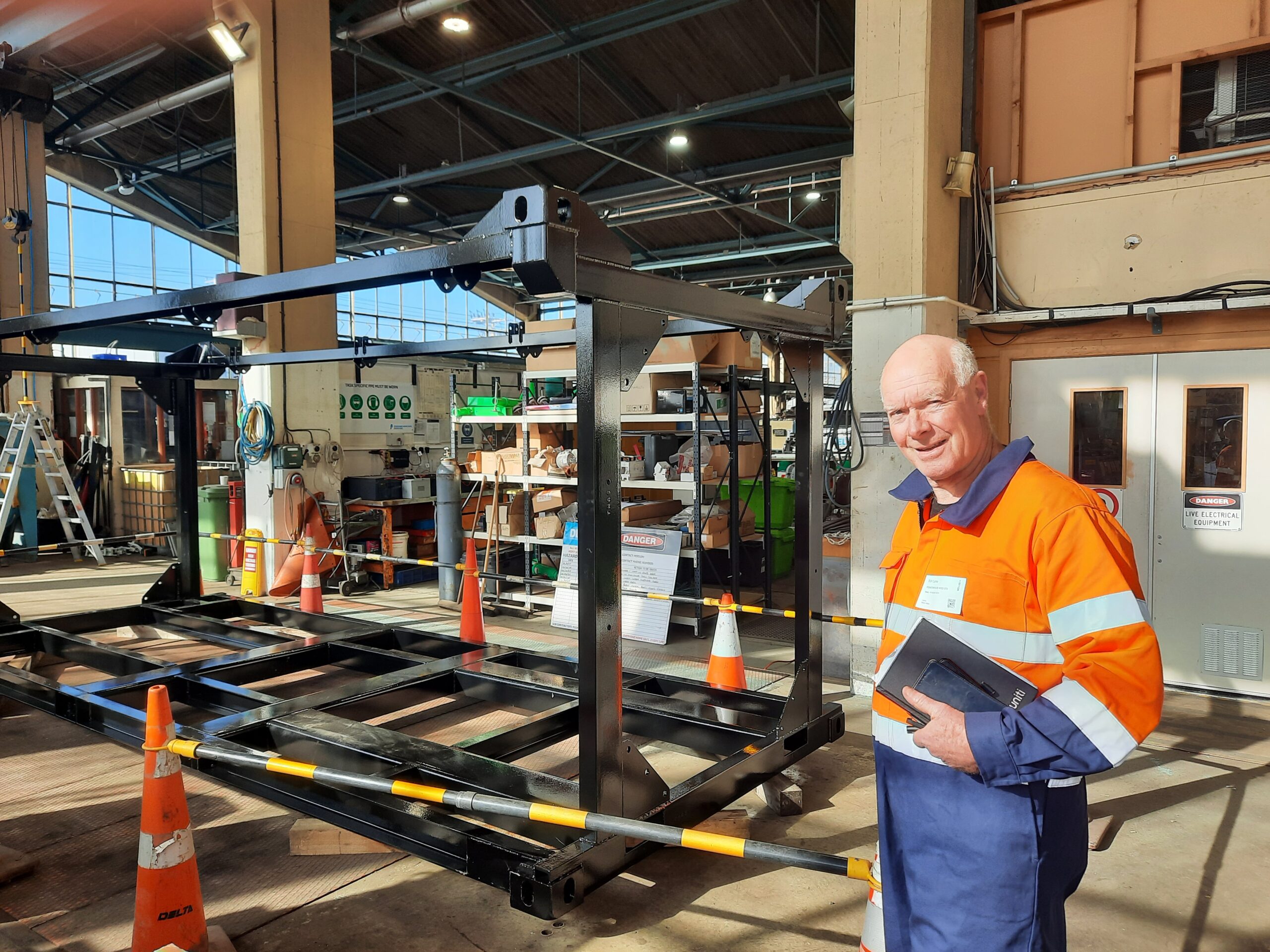
To house the energy hub we modified our PowerCrate frame design so that it could compactly fit inside a 20ft shipping container, and yet still house large PV panel sets.
The Power Plant and 168kWh of Storage
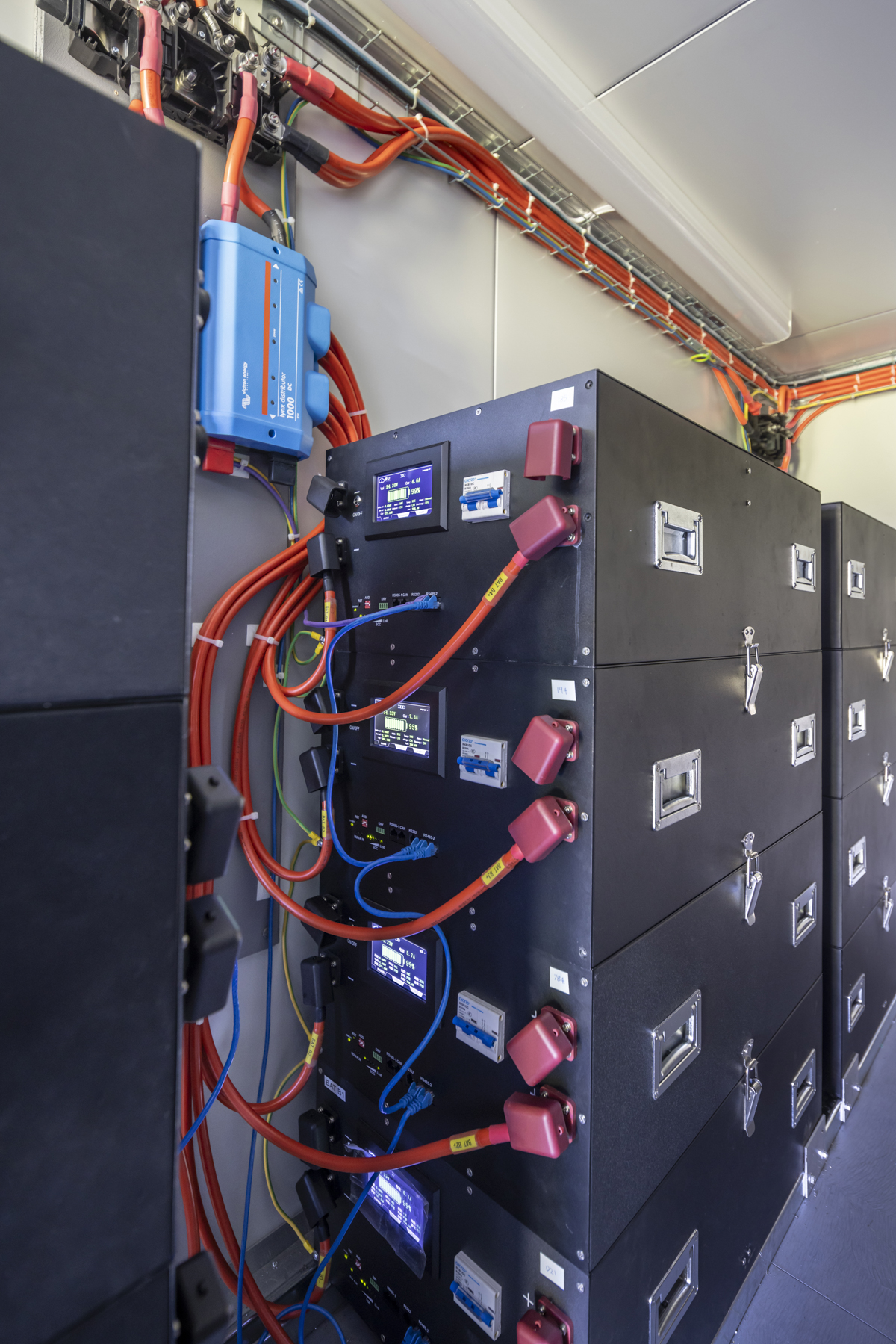
From the brief it was a requirement that ongoing operational costs should be minimized. In the Solomon Islands the electrical grid is going through a transition but current costs of electricity are still hight at ~1USD/kWh. It pays to be able to store or export as much solar energy as possible. Thus at the heart of the PowerCrate is the large LiFePO4 Battery Energy Storage System (BESS)
Working with Control Focus, we installed a large 168kWh battery bank to provide backup energy to power critical functions for up to 5 days. The battery bank can be re-charged from the PowerCrate’s PV roof , an external PV field array, or the grid, ensuring that there are always deep reserves to operate through prolonged periods of cloud cover or grid failure.
Commissioning and Factory Acceptance Testing (FAT)
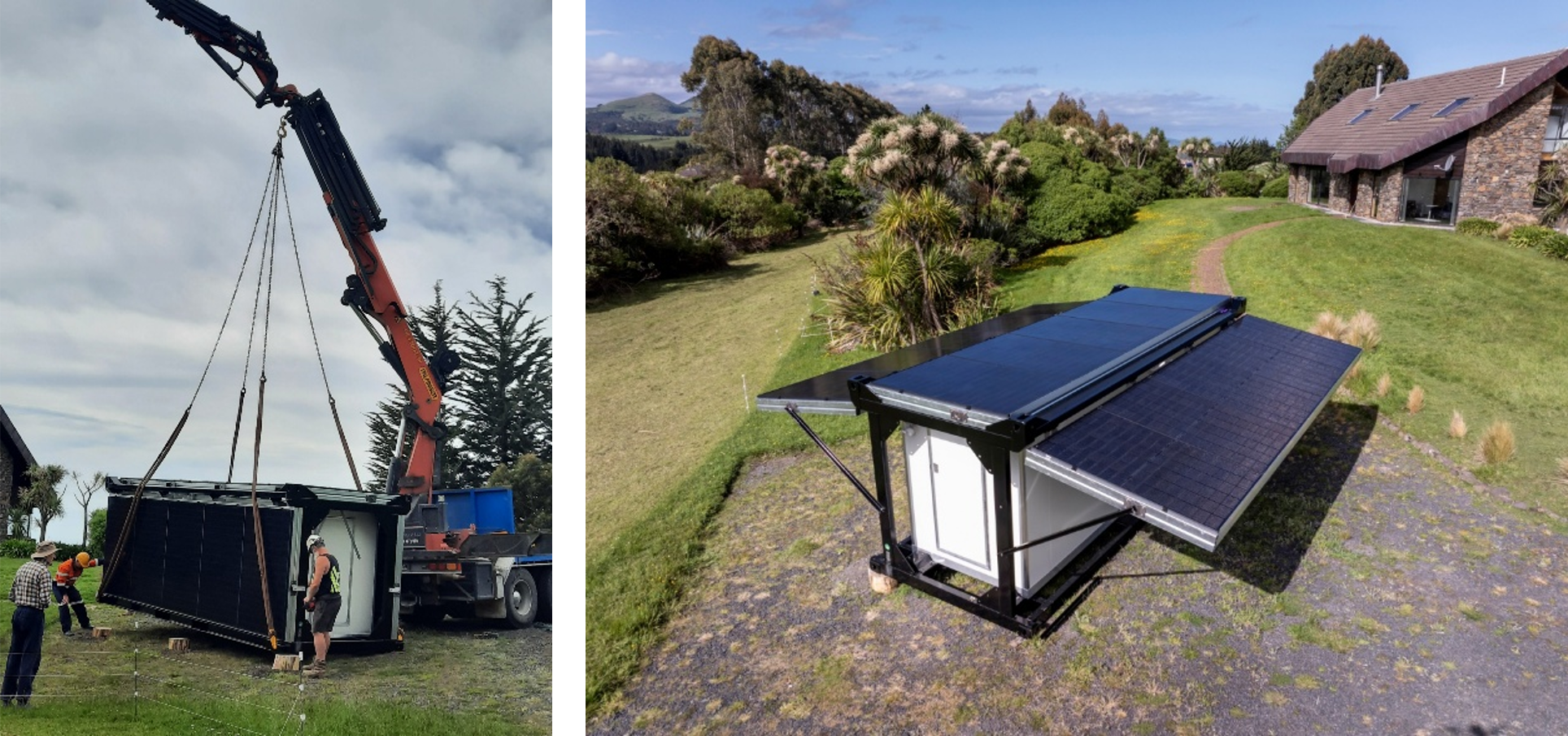
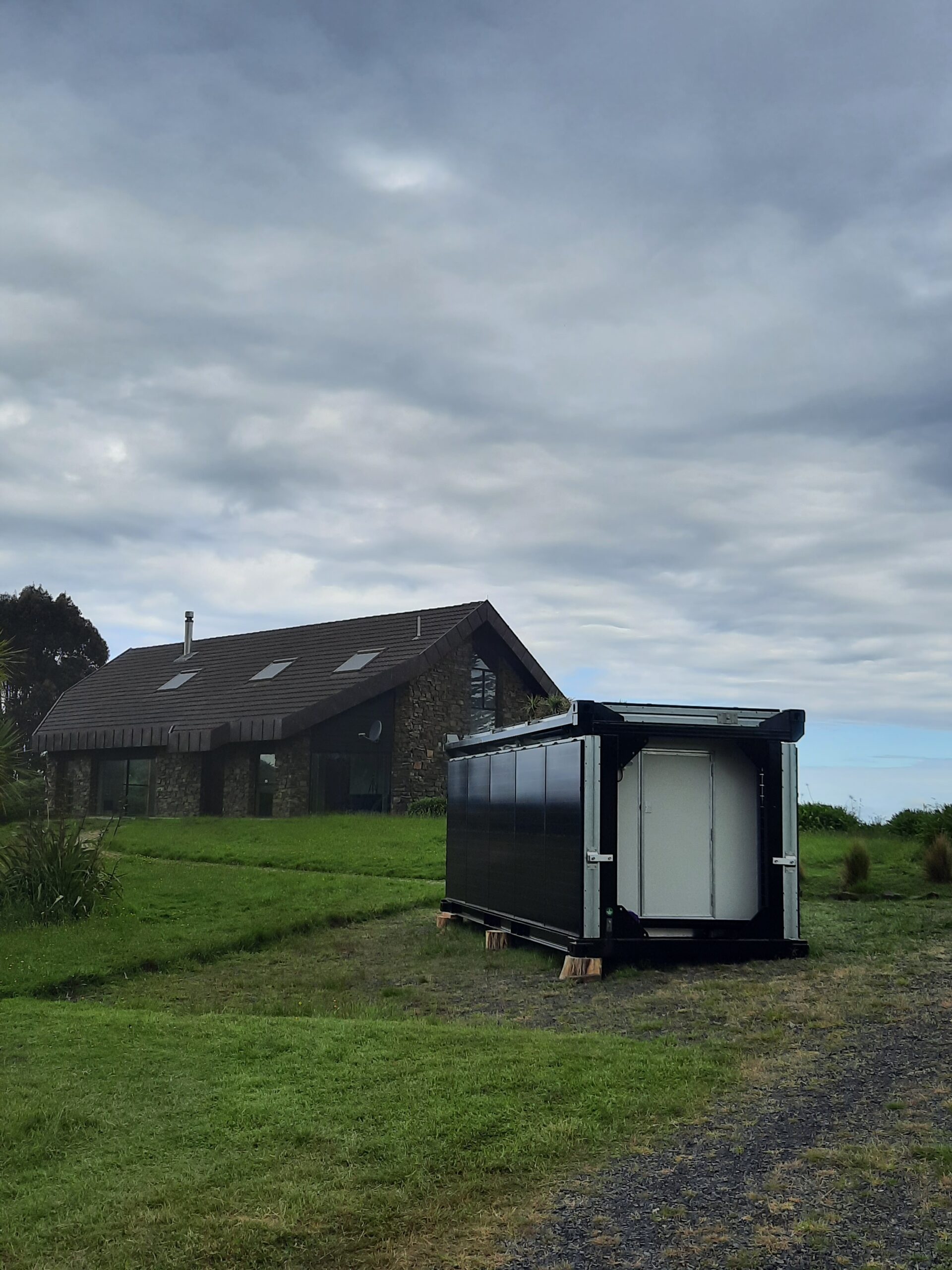
Island supply chains are well developed but inevitably expensive and so reliability and ease of deployment is paramount in the design. In keeping with the PowerCrate philosophy, we did a standard deployment by HIAB at our test site and then performed the full Factory Acceptance Testing (FAT) right here in Dunedin. While we can’t order the weather, nature nevertheless cooperated, subjecting the PowerCrate to 100 kph winds, rain and strong sun. A big thank you to our friends in Brighton who lent their front yard to us for the FAT . Their idyllic home also provided the beautiful coastal Otago backdrop for our pictures.
By testing complete systems before they leave us we ensure them to be plug-and-play on arrival at the application site.
Packed and Ready to Send
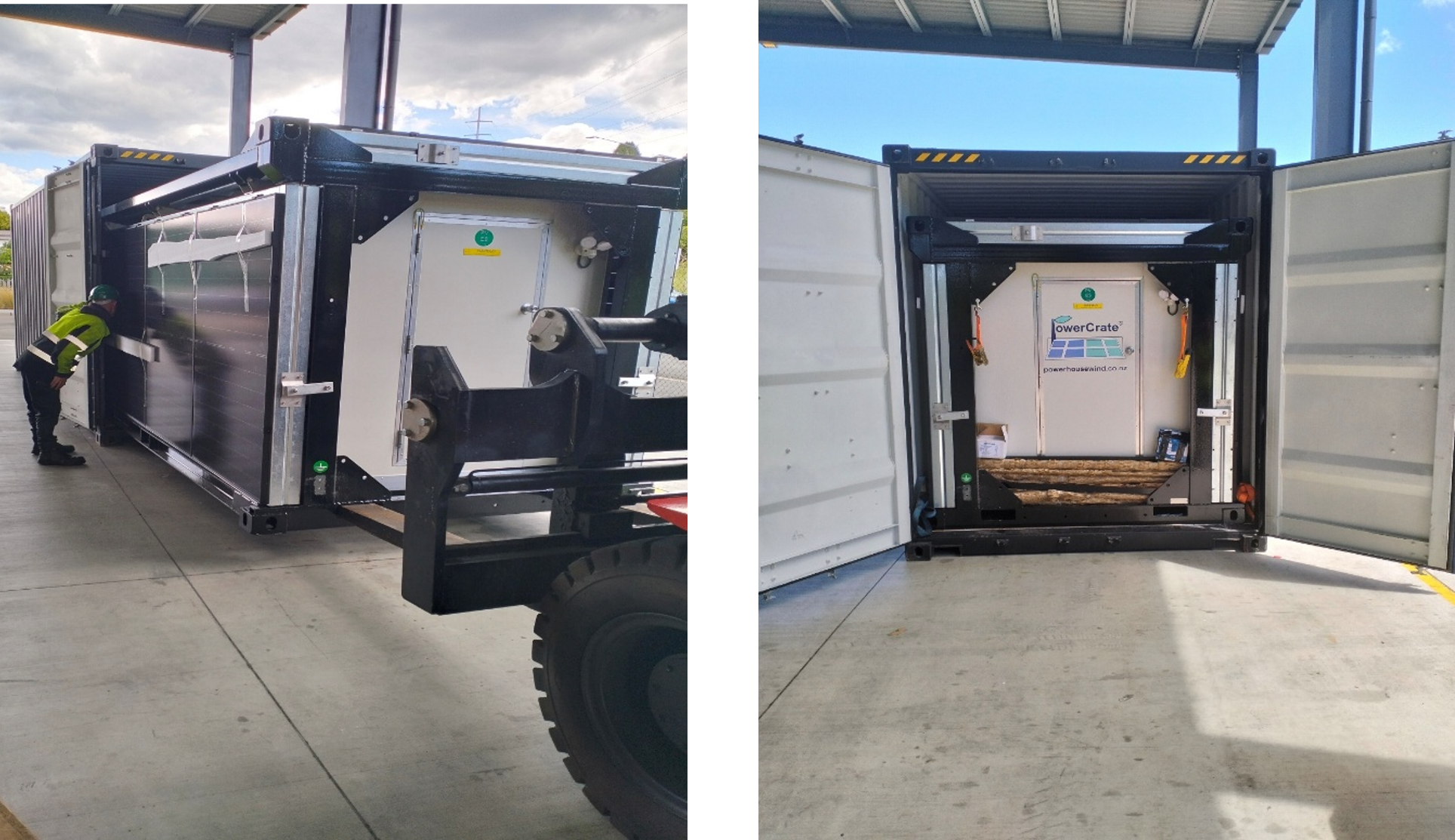
With the green light from testing, the final step was packing it all down for shipment. Everything fits securely inside the container, ready to be lifted onto a HIAB truck, then the cargo ship, and finally delivered to the site. Once it arrives, it will be dragged out of the container by a forklift, positioned, and connected to the grid and microgrid – all inside a day!
We would like to thank our client for trusting our modular technology for supporting their critical piece of Pacific infrastructure. We are also eager to hear feedback from our Pacific partners and see where we can collaborate to improve the design to better fit the local needs. It’s a month long journey to Honiara and we expect to post some beautiful pictures in Part 2 of this blog. In the meantime we invite other parties in the Pacific to discuss how a PowerCrate could fit their application need.
Recent Comments